How to compost soft weeds with a weed composting bag
Posted:
If you’ve got soft, invasive weeds on your property and want to get rid of them, a weed composting bag may be the solution for you. Our sturdy, premium-quality weed bags are made in New Zealand from UV-stable material, and are ideal for composting soft pest plants such as Tradescantia, Plectranthus or African club moss.
Why use a weed composting bag?
Even if you have a traditional compost bin, it’s best to compost your invasive weeds separately to ensure that they don’t spread further. Firstly, it makes it easier to ensure that you eliminate light, as many invasive weeds can continue to grow with just a bit of access to light. Secondly, composting your weeds separately means that you can keep them contained for much longer than you would normally leave your traditional compost bin for, and ensure that all parts of the plant are fully broken down before using the compost. This is important because some pest plants can regrow from fragments.
Weed bags are also very handy if you don’t want to use herbicides, don’t have a trailer, or simply don’t want to move your weeds a long way.
How do I use the weed composting bag?
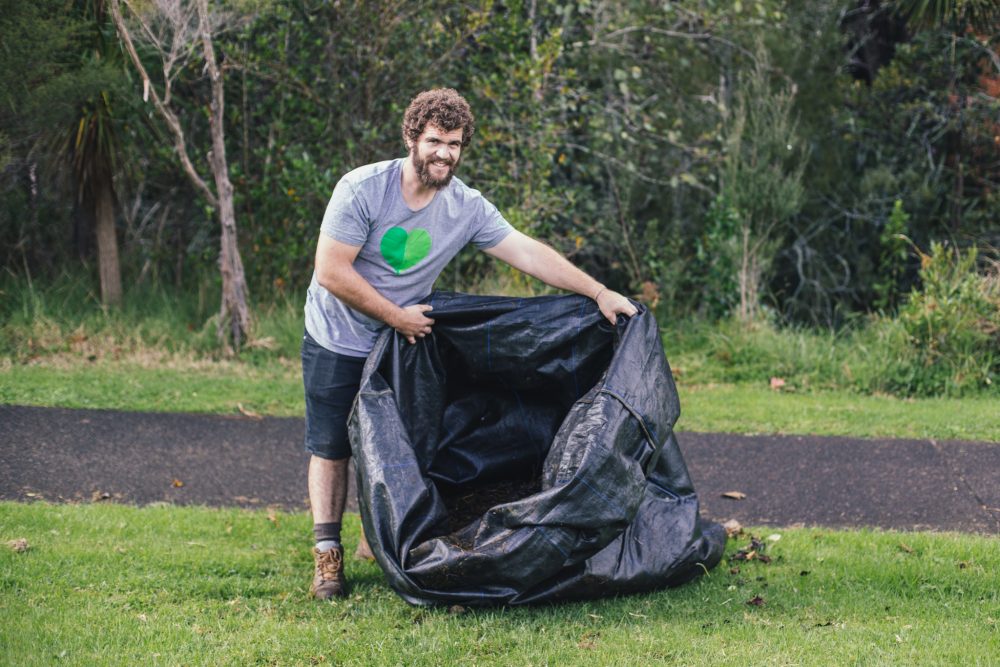
Choose a spot to put your weed bag. These bags are heavy once full, so you don’t want to move it around if you can avoid it. Ideally you also want a spot that will get as much sun as possible, as heat helps the weeds to break down. Then just fill up the bags with weeds! You can mix different types of soft weeds in one bag. Once full, wrap it up like a present. Putting a brick or log on top can help it stay closed. Preventing any light from entering will help stop the weeds growing.
How long will it take?
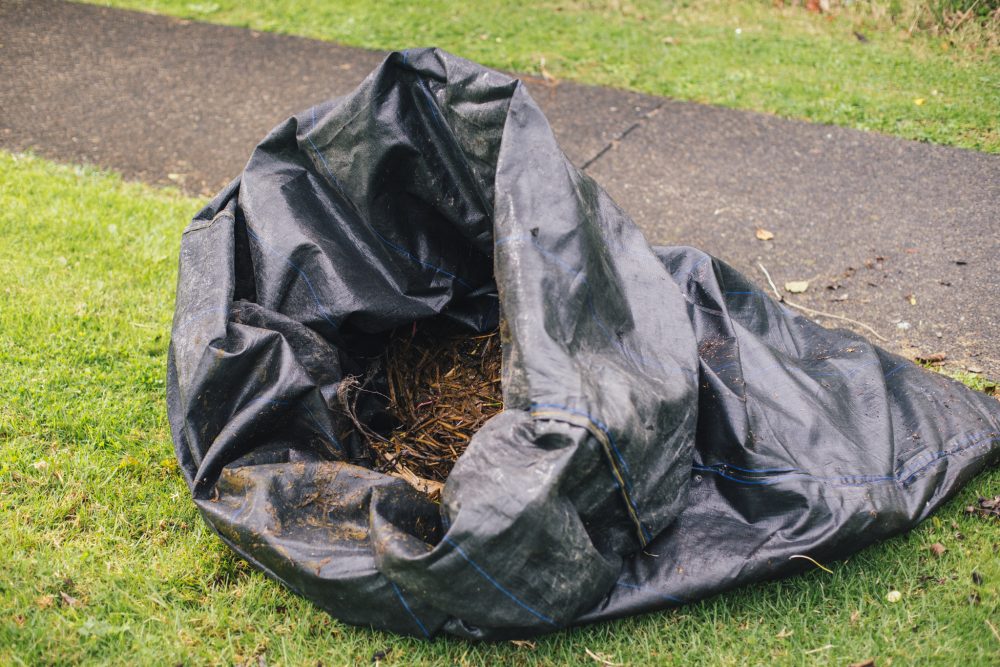
The type of weeds in the bag and where you leave it affects how long it will take to break down. For example, a full bag of Tradescantia can take from 6 to 12 months to break down. Once the contents of the bag looks like soil, it’s ready to use as compost.
Preventing the spread of kauri dieback
If you live in the Waitākere Ranges area, we recommend not moving vegetation off your property if you can avoid it, which makes these weed composting bags a good choice. It’s especially important if you have kauri trees on your property to not move anything (soil or vegetation) from around the base of kauri trees. This helps prevent the spread of kauri dieback disease. See kauriprotection.co.nz for more information.
What not to do
Avoid putting any seeds from the weeds into the bag, because they won’t die and will regrow when you use the compost. Avoid woody weeds, such as tree privet, which can take a very long time to break down, or large branches, as these can rip the bag, letting light in.
Features
Stitched together in New Lynn, Auckland, they’re made of heavy duty UV-stable polyethylene and designed to last 5+ years outdoors in the harsh New Zealand sun.
- Small bag (1.8m x 1.8m, $48) – includes 2 webbing loops for hanging on a fence or gate, with a flap closure
- Large bag (1.8m x 2.4m, $58) – includes a secure drawstring closure
How do I purchase?
Order online or visit us at the EcoMatters Store:
1 Olympic Place, New Lynn
Open Wed-Sun, 10am-2pm (except on public holidays)